 K-Dogam
No. 025 · Jeotgal
What Is Saeujeot? Korean Salted Shrimp, Types and Uses
새우젓 · Saeujeot
At a Glance
- Type
- Jeotgal (Korean salted seafood) in the Korea Food Code
- Made from
- Tiny shrimp and salt
- Taste
- Very salty, with a savory seafood depth
- Texture
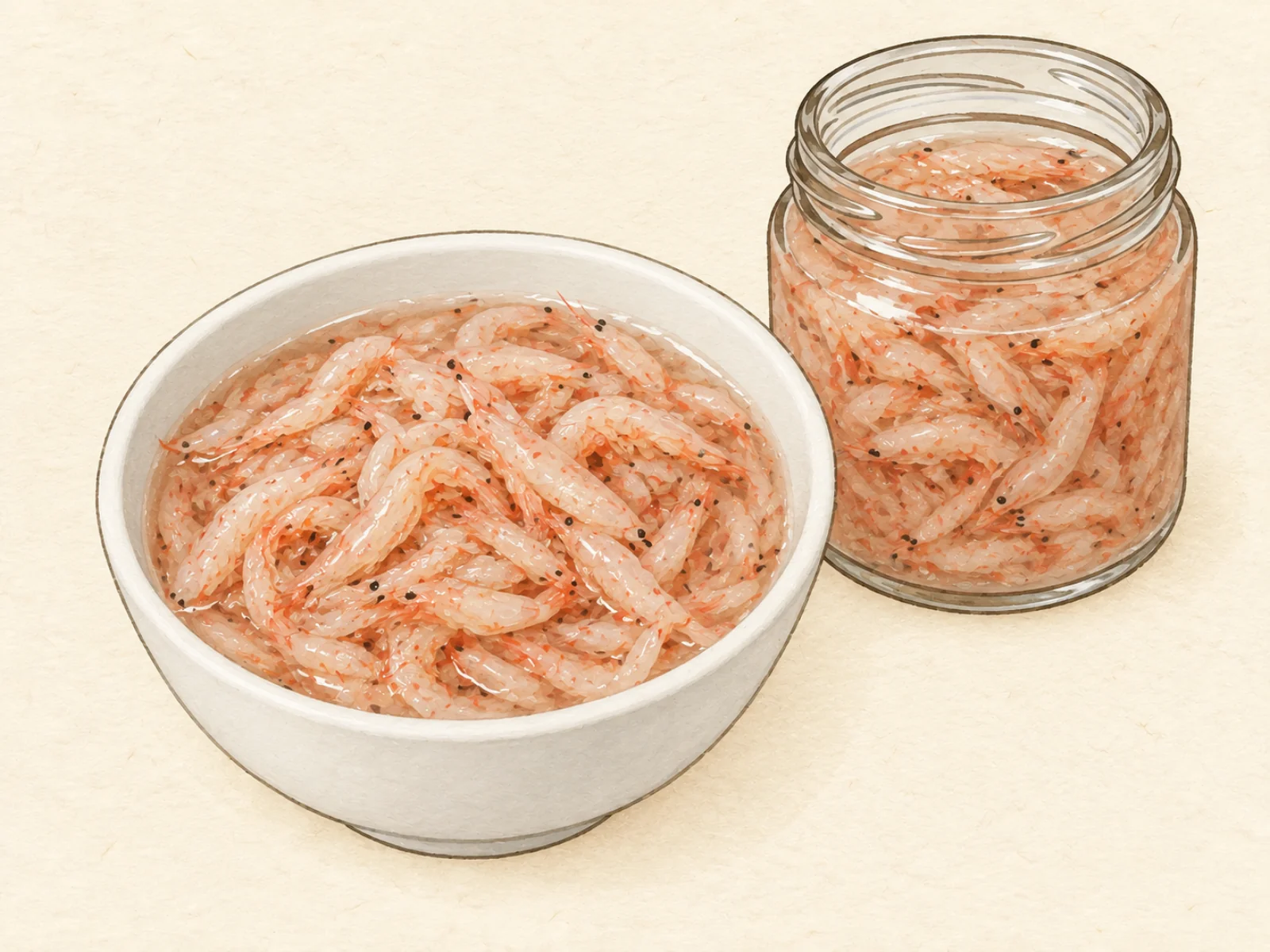
- Small whole shrimp in a salty liquid
- Main use
- Seasoning kimchi, steamed eggs and stews; served with boiled pork
About This Ingredient
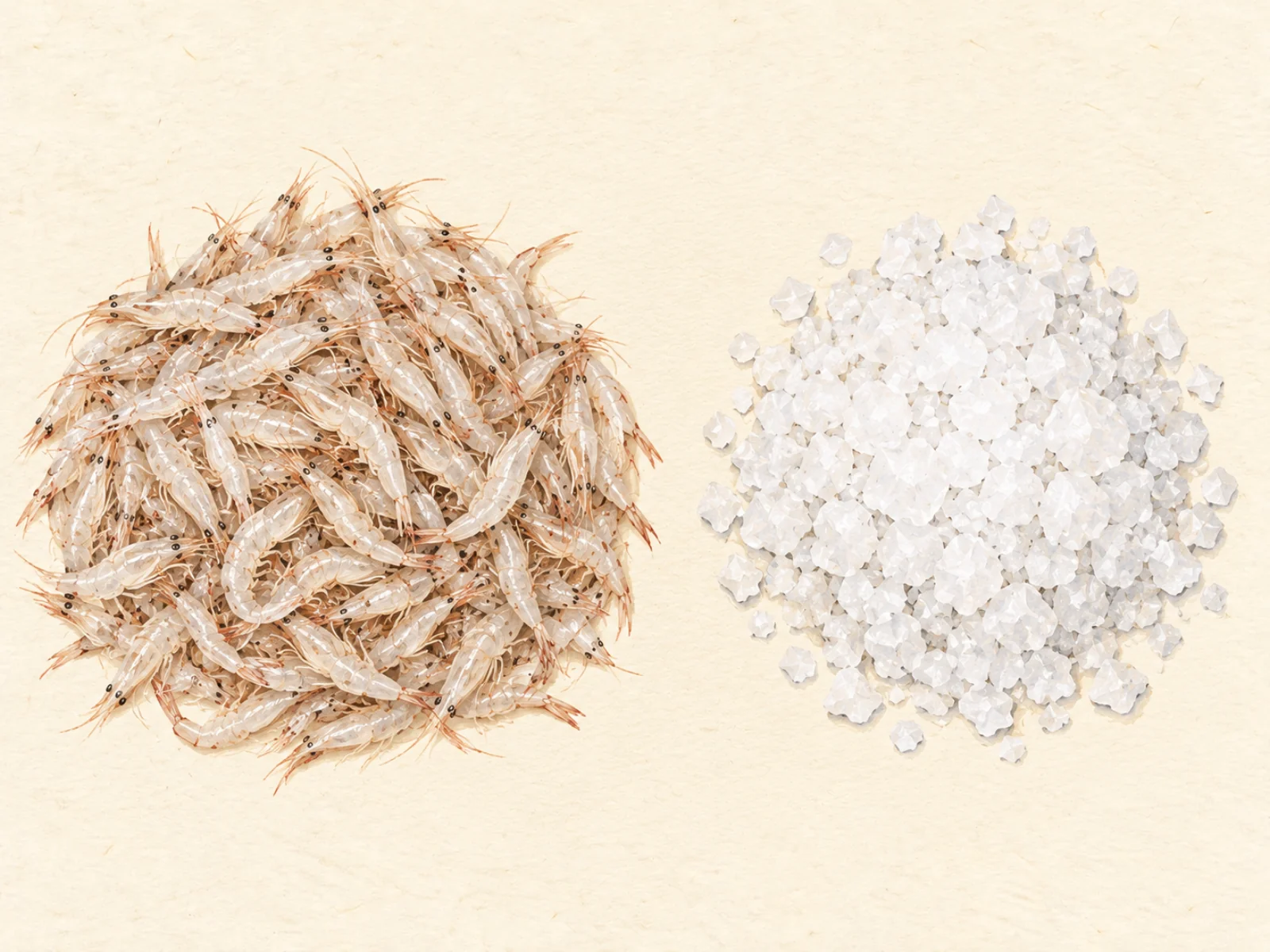
Saeujeot (Korean salted shrimp) is tiny shrimp cured in salt and left to ferment. It is very salty, with a savory seafood depth, and it seasons kimchi, gyeran-jjim (steamed eggs) and stews, and is served with boiled pork. This entry covers its seasonal types, how to read the label, where to buy it and how to store it.
To make it, salt is added to the shrimp, which are then fermented and aged. Under the Korea Food Code, jeotgal must contain at least 60% seafood by fresh weight, and water or brine cannot be added to stretch it.
A small amount goes a long way. In the steamed egg recipe in this guide, it is finely chopped before it goes in.
History
A 1432 entry in the Annals of King Sejong records an official who asked to resign after receiving baekhajeot, a type of salted shrimp.
The Jeungbo sallim gyeongje, compiled in 1766, describes a soup of oysters and tofu seasoned with the liquid from salted shrimp.
The Dongguk sesigi, with a preface dated 1849, records salted shrimp in the kimchi made for winter.
Ganggyeong is known for salted seafood trade along the Geum River, Gwangcheon for salted shrimp aged in caves, and Mapo in Seoul for its riverside salted shrimp trade.
Types
- Ojeot
- Named for shrimp caught in May.
- Yukjeot
- Named for shrimp caught in June.
- Chujeot
- Named for shrimp caught in autumn.
- Dongbaekhajeot
- Named for shrimp caught in winter. These seasonal names are separate from the legal food type on the label.
How to Choose
- Food type
- Look for jeotgal (젓갈). Seasoned jeotgal (양념젓갈) has chili flakes or other seasonings added, so it is a different type.
- Origin
- Check where the shrimp and the salt come from. They can be listed separately.
- Shrimp content
- Check the shrimp percentage in the ingredient list. It differs by product.
- Salt
- Korean labels show the salt content of jeotgal. Use it to compare how salty products are.
- Storage and date
- Read the storage temperature, the date and any instruction after opening together.
Where to Buy
- Korean grocery stores stock it in the refrigerated or frozen section. Ask for saeujeot.
- Some large Asian grocery stores and online grocers also sell it.
- Search or ask for saeujeot, Korean salted shrimp or salted fermented shrimp.
- Dried shrimp can also sit in a refrigerated case, so check for small shrimp in liquid, not dry shrimp.
Storage
After buying it, refrigerate or freeze it at the temperature on the package.
Take out what you need with a clean, dry spoon.
The sources reviewed do not establish one storage limit after opening for all saeujeot products. Follow the date and any instruction after opening on the package.
Saeujeot is also eaten without cooking.
Substitutes
- Fish sauce
- Adds salt and savory depth, but not the small shrimp pieces. Fish sauce contains fish, a different allergen to check.
- Salt
- Adds saltiness only, without the fermented shrimp flavor. One steamed egg recipe uses it in place of saeujeot.
Similar Ingredients
- Dried shrimp
- The same kind of small creature, but one that chose drying over brine; it sits on the shelf dry, with no liquid.
- Shrimp paste
- Southeast Asian shrimp pastes are ground shrimp fermented with salt, sold as sauces, pastes or pressed blocks such as belacan. Saeujeot keeps the whole small shrimp.
- Fish sauce (aekjeot)
- Fish sauce is the strained liquid of fermented seafood, a separate type from jeotgal with whole pieces.
Used In
FAQ
What can I use instead of saeujeot?
Fish sauce adds salt and savory depth but not the shrimp pieces. Salt works in some dishes, such as steamed eggs, but adds no shrimp flavor. Start with a little and taste.
Can I eat saeujeot if I am allergic to shrimp?
No. Saeujeot is made from shrimp, a crustacean. Do not assume that salting or fermentation makes it safe for a shrimp allergy.
Does saeujeot go bad even though it is salted?
Salt and fermentation do not keep it safe forever. Keep it at the temperature on the package, use a clean, dry spoon, and check the date and any instructions after opening.
Do I need saeujeot to make kimchi?
Not always. Some kimchi recipes use it for salt and savory depth, but recipes differ, so check the one you follow.
Are salted shrimp and fermented shrimp the same thing?
English ingredient guides use both salted shrimp and fermented shrimp for saeujeot. Other shrimp products use similar names, so look for small whole shrimp in liquid.
Sources
- My Korean Kitchen — Saeujeot
- Carving A Journey — Korean fermented salted shrimp
- The Woks of Life — Dried and preserved ingredients
- The Woks of Life — Shrimp paste and shrimp sauce
- Maangchi — Salted fermented shrimp
- Korean Bapsang — Gyeranjjim
- Jonggajip — Chujeot saeujeot (in Korean)
- Korea Food Code — Salted seafood (in Korean)
- Korea Law Information Center — Food labeling standards (in Korean)
- National Folk Museum of Korea — Saeujeot (in Korean)
- Korea Consumer Agency — Salted seafood safety (in Korean)
- Fishery Product Safety Information — Storing saeujeot (in Korean)
- Korea Law Information Center — Food labeling rule, annex 2 (in Korean)
- Annals of the Joseon Dynasty — Sejong, 1432 (in Korean)
- Encyclopedia of Korean Culture — Jeungbo sallim gyeongje (in Korean)
- Encyclopedia of Korean Culture — Jeotguk jjigae (in Korean)
- National Folk Museum of Korea — Jeotgal (in Korean)
- National Folk Museum of Korea — Jeotgal markets (in Korean)
Compiled and reviewed by Nuri · Published