 K-Dogam
No. 023 · Yangnyeom
What Is Korean Sesame Oil? Chamgireum, Types and Uses
참기름 · Chamgireum
At a Glance
- Type
- Sesame oil (an edible oil in the Korea Food Code)
- Made from
- Sesame seeds, usually toasted, then pressed
- Taste
- Nutty, with a strong toasted aroma
- Texture
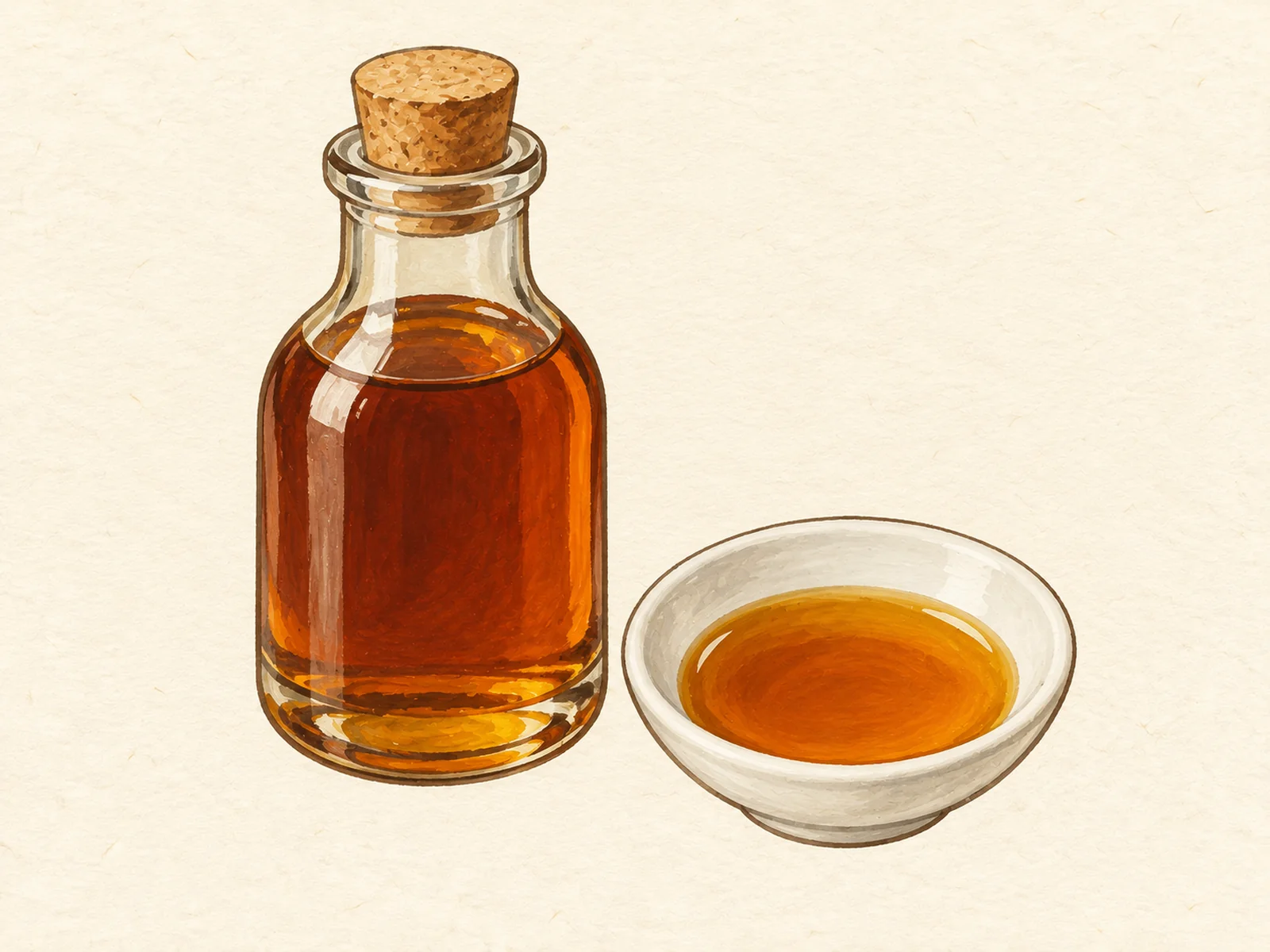
- Amber to brown oil
- Main use
- Finishing, seasoned vegetables and marinades
About This Ingredient
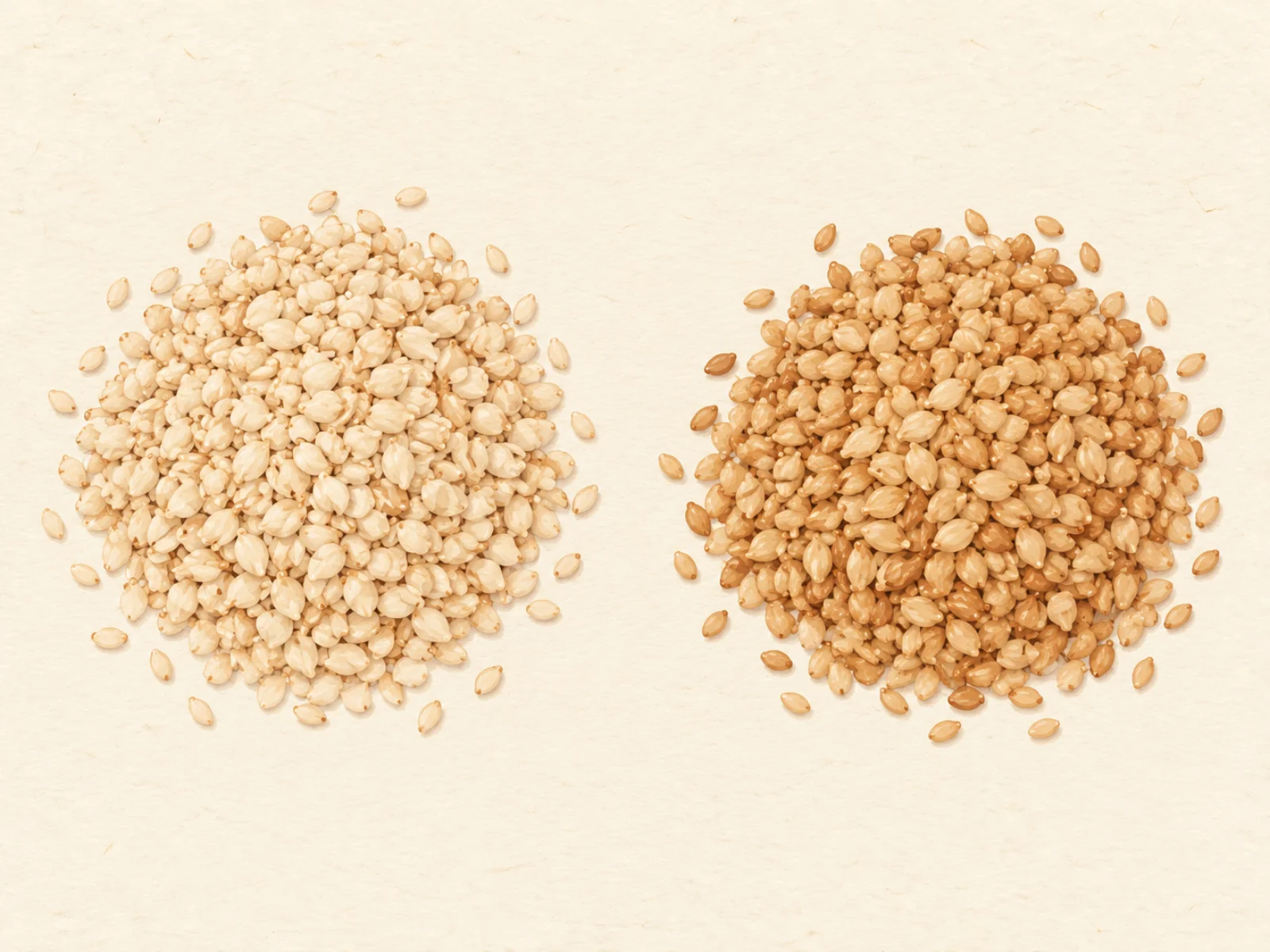
Chamgireum (Korean sesame oil) is an oil pressed from sesame seeds, usually toasted first. It is amber to brown, with a nutty, toasted aroma, and Korean cooks add it to seasoned vegetables, marinades, bibimbap (mixed rice bowl) and finished dishes for fragrance. This entry covers its types, how to read the label, where to buy it and how to store it.
To make it, sesame seeds are toasted and pressed, then the oil is left to settle or filtered to remove sediment. Under the Korea Food Code, pressed sesame oil cannot be mixed with other oils, and some makers press the seeds without toasting them.
A little goes a long way. Toasted sesame oil gives the strongest aroma when added near the end, and long cooking over high heat can make it taste burnt.
History
The Goryeo dogyeong, submitted in 1124, lists sesame among the crops suited to the land of Goryeo.
Cargo tags from the Mado No. 2 shipwreck, dated to the late 12th or early 13th century, record sesame oil sent to the capital, Gaegyeong.
The Eumsik dimibang, generally dated to around 1670, uses sesame oil in its japchae (a mixed dish) and fish dumplings.
In the early 20th century, small oil shops pressed and sold sesame oil. An account of Gyeongseong (now Seoul) in 1924 names sesame and perilla oils as major products of its oil trade.
Types
- Toasted sesame oil
- The seeds are toasted before pressing, which gives the oil its deep color and toasted aroma.
- Saeng-chamgireum (untoasted sesame oil)
- Some makers press sesame seeds without toasting them, so the color and aroma are milder.
- Cold-pressed sesame oil
- This name describes the pressing method. One cold-pressed product is labeled light-roasted, so it does not always mean untoasted.
How to Choose
- Food type
- Look for sesame oil (참기름). Under the Korea Food Code, pressed sesame oil cannot be mixed with other oils. Flavored oil (향미유), extracted sesame oil and blended oil are different types.
- Ingredients
- Check the sesame content and any other ingredients. "Pure" on a label means not mixed with other oils; it does not say whether the seeds were toasted.
- Origin
- Check where the sesame seeds were grown. The address of the maker is a different thing.
- Toasting and pressing
- Look for toasted, roasted or untoasted, and read the pressing method separately.
- Date and storage
- Read the date and the storage instructions, including any instruction after opening.
Where to Buy
- Korean grocery stores sell it. Ask for chamgireum or toasted sesame oil.
- Asian grocery stores carry several kinds. Check whether the oil is toasted.
- Some general grocery stores stock it in the cooking oil section.
- Online shops sell it.
- Packages use names such as toasted sesame oil, roasted sesame oil and pure sesame oil.
Storage
Before opening, follow the storage instructions on the package.
After each use, close the bottle tightly. Keep it in a cool place away from direct sunlight.
Some makers allow room temperature or refrigeration, and others say to refrigerate after opening. Follow your product's instructions.
Sesame oil can turn cloudy or partly solid in the refrigerator. Clouding or solids alone do not show that it has spoiled.
Oil quality drops faster with heat, light, air and moisture.
Substitutes
- Deulgireum (perilla oil)
- Another nutty Korean seed oil, but its flavor is different. It does not copy the aroma of sesame oil.
- Untoasted sesame oil
- Adds oil but not the toasted aroma. The result tastes milder.
- Walnut oil
- One guide lists it as a substitute. The flavor and cooking use are not the same.
Similar Ingredients
- Deulgireum (perilla oil)
- Perilla oil comes from perilla seeds, and the Korea Food Code lists it separately from sesame oil.
- Flavored oil (hyangmiyu)
- Flavored oil combines an oil base with flavorings. The Korea Food Code lists it as a separate type, so it is not sesame oil even when it smells of sesame.
Used In
- No. 003 Spicy Korean Pork Stir-Fry (Jeyuk Bokkeum) Recipe
- No. 004 Beef Bulgogi (Korean Marinated Beef) Recipe
- No. 008 Beef Bibimbap (Korean Mixed Rice Bowl) Recipe
- No. 009 Classic Gimbap (Kimbap) Recipe with Ham and Egg
- No. 013 Galbi-jjim (Korean Braised Short Ribs) Recipe
- No. 014 Japchae (Korean Glass Noodles) Recipe with Beef
- No. 019 Miyeokguk (Korean Seaweed Soup with Beef) Recipe
- No. 020 Ttukbaegi Gyeran-jjim (Korean Steamed Eggs) Recipe
- No. 021 Kimchi Fried Rice (Kimchi-bokkeumbap) Recipe with Bacon
FAQ
Is toasted sesame oil the same as sesame oil?
Not always. Sesame oil can mean either toasted or untoasted oil. Toasted oil is darker and has a strong toasted aroma; untoasted oil is lighter and milder, so it does not give the same aroma.
How do I store opened sesame oil?
Close the bottle after each use and keep it away from heat and sunlight. Follow the package on whether to refrigerate it. Stop using it if it smells rancid.
Can I cook with toasted sesame oil?
Yes, over low or medium heat, and as a finishing oil. Long cooking over high heat can make it taste burnt and bitter.
What can I use instead of toasted sesame oil?
Perilla oil or untoasted sesame oil can add oil and some nutty flavor, but neither copies the toasted aroma. Use a small amount and taste.
What does pure sesame oil mean?
It means the oil is not mixed with other oils. It does not tell you whether the seeds were toasted, so read the rest of the label.
Sources
- Kimchimari — Sesame oil
- The Woks of Life — Sesame oil
- EatingWell — Sesame oil
- My Korean Kitchen — Perilla oil
- Korea Food Code — Edible oils (in Korean)
- CJ — Storing sesame oil (in Korean)
- Queensbucket — Cold-pressed sesame oil (in Korean)
- Dadamda — Untoasted sesame oil (in Korean)
- Encyclopedia of Korean Culture — Sesame oil (in Korean)
- Centre for Food Safety (Hong Kong) — Fats and oils
- Kadoya — Sesame oil FAQ (in Japanese)
- Health Canada — Refined oils and allergens
- Korean History Database — Goryeo dogyeong (in Korean)
- National Research Institute of Maritime Heritage — Mado No. 2 (in Korean)
- Encyclopedia of Korean Culture — Eumsik dimibang (in Korean)
- Google Arts & Culture — Eumsik dimibang dishes (in Korean)
- Federation of Korean Cultural Centers — Gyeongseong oil trade (in Korean)
Compiled and reviewed by Nuri · Published