 K-Dogam
No. 022 · Yangnyeom
What Is Gochugaru? Korean Chili Flakes, Types and Uses
고춧가루 · Gochugaru
At a Glance
- Type
- Gochugaru (a seasoning in the Korea Food Code)
- Made from
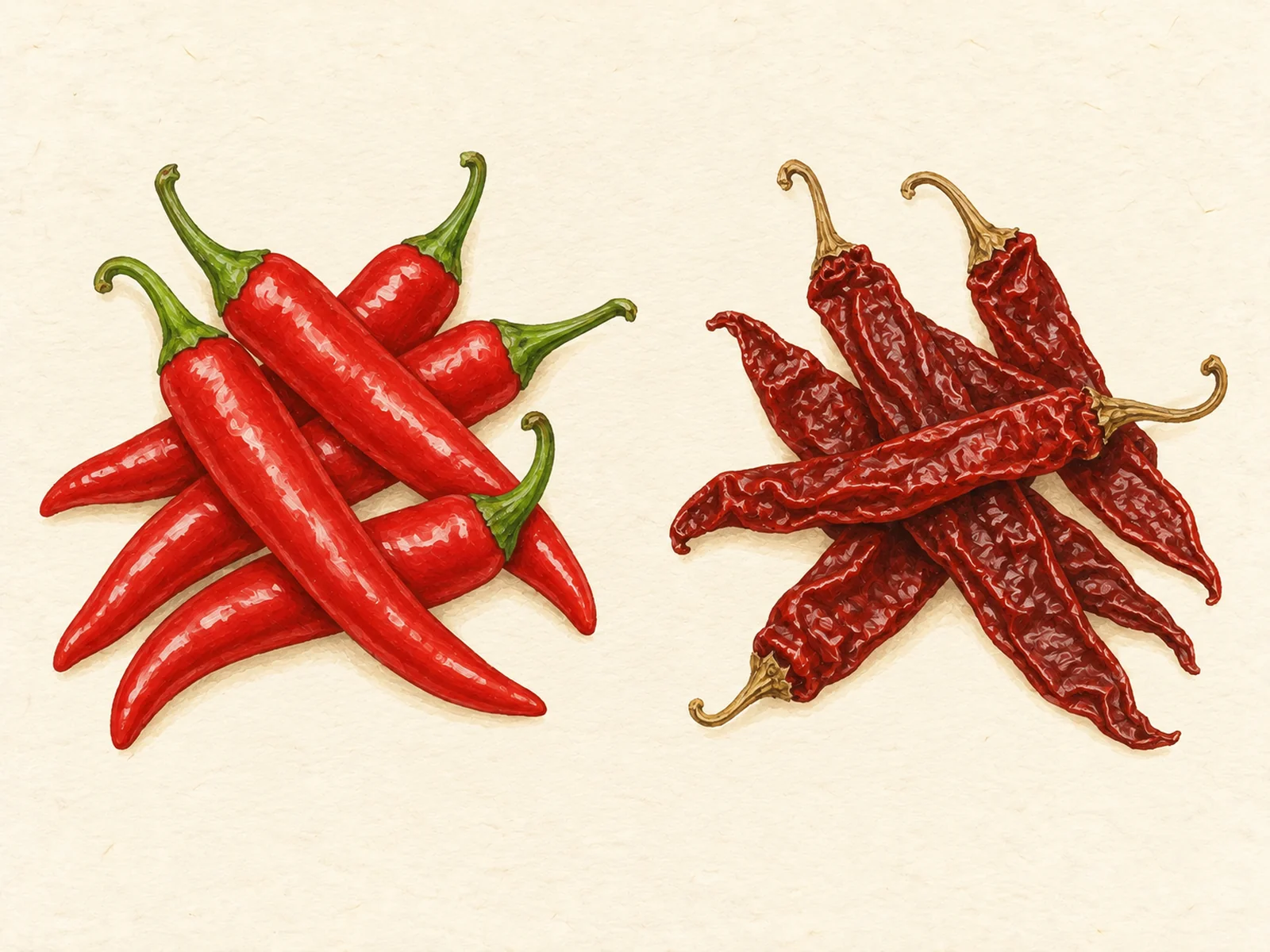
- Ripe red chili peppers, dried and ground
- Taste
- Spicy, with a fruity, slightly sweet chili flavor
- Texture
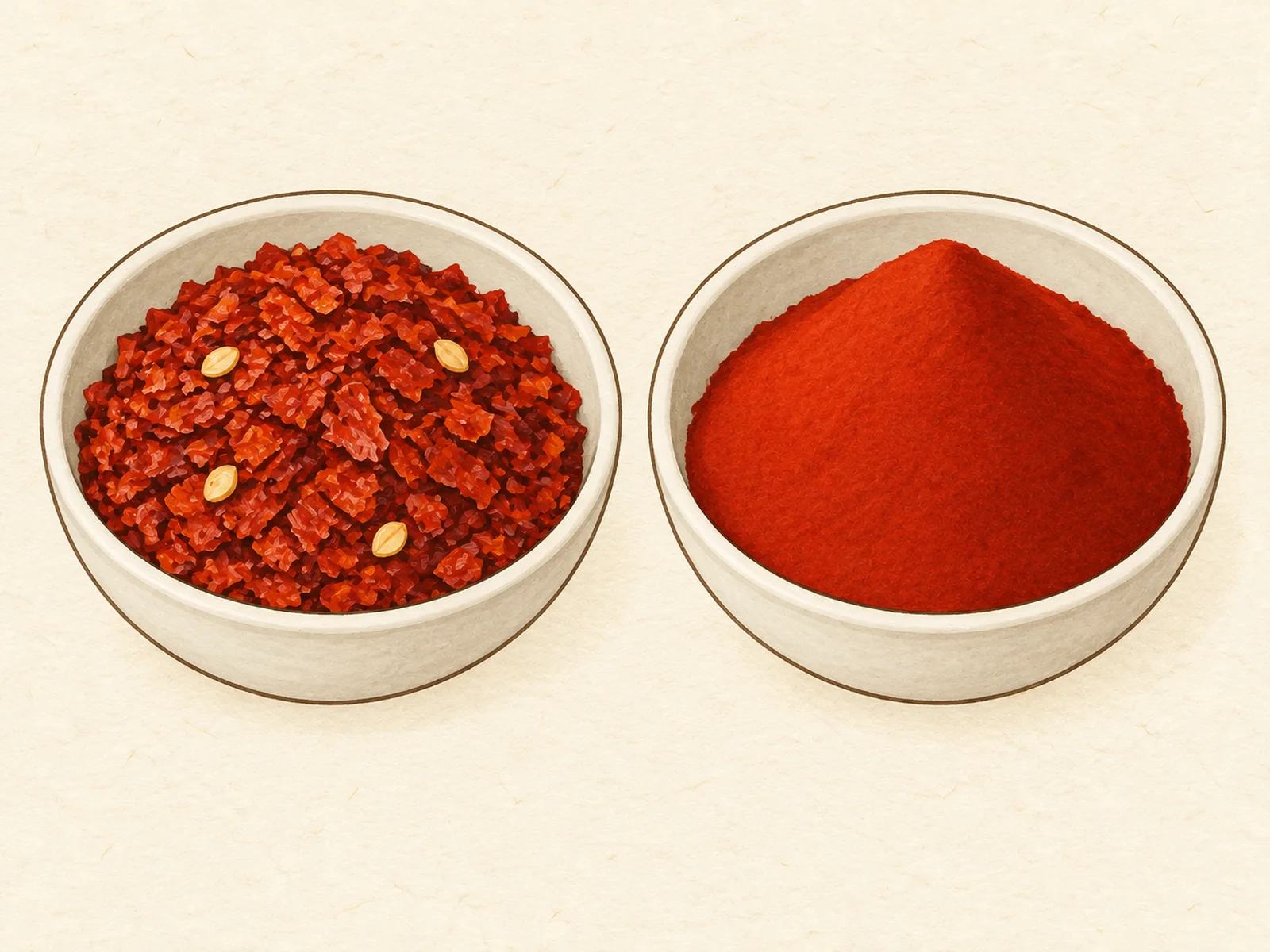
- Coarse flakes or fine powder
- Heat label
- Varies by product; some packages show a heat level
About This Ingredient
Gochugaru (Korean chili flakes) is dried ripe red chili ground into coarse flakes or a fine powder. It brings heat and a fruity chili flavor, and it goes into kimchi, tteokbokki (spicy rice cakes), spicy stews and gochujang (Korean chili paste). This entry covers its grinds and drying methods, how to read the label, where to buy it and how to store it.
To make it, the stems are removed from ripe chilies, and the chilies are dried and ground, then packed away from moisture and sunlight. Under the Korea Food Code, nothing else such as salt, sugar or starch can be added, and seeds can be included only from the chilies themselves.
Grind and heat are separate things. Coarse flakes are not always hotter than fine powder; the heat depends on the chilies used, so read the grind and the heat level as two different labels.
History
Chili peppers are generally thought to have reached the Korean Peninsula in the late 16th or early 17th century.
The 1766 Jeungbo sallim gyeongje names ground chili in a recipe for oi-sobagi (stuffed cucumber kimchi). The same book records ground chili as an ingredient in jang (Korean fermented paste).
Ground chili also appears in a kimchi recipe in the Somun saseol. The book's date is disputed, so it is hard to say exactly when Koreans began to use ground chili.
Types
- Coarse gochugaru
- Coarse gochugaru has visible red pieces and some seeds. The name describes the grind, not the heat.
- Fine gochugaru
- Fine gochugaru is ground to a smooth powder for sauces and pastes. Labels such as "for soup" or "for seasoning" name a use and do not fix the grind.
- Taeyangcho (sun-dried) gochugaru
- Taeyangcho gochugaru uses chilies dried in the sun. The name describes the drying method, a different axis from the grind.
- Hwageon (machine-dried) gochugaru
- Hwageon gochugaru uses chilies dried with hot air. Some hot-air drying uses low temperatures, so "low-temperature dried" does not mean sun-dried.
How to Choose
- Food type
- Look for gochugaru (고춧가루). Under the Korea Food Code, it is only dried, ground chili; salt, sugar or starch cannot be added.
- Ingredients
- Check that red chili is the only ingredient. A product named "gochugaru seasoning" can be a blend.
- Origin
- Check where the chilies were grown. The address of the maker is a different thing.
- Grind and use
- Look for fine or coarse, and read uses such as "for kimchi" together with the grind. An English name alone does not show the grind.
- Heat level
- Some packages show a heat level such as mild or hot. In one study, only about half of the labeled products matched the heat measured in them, so treat the label as a guide.
- Date and storage
- Read the date, the storage instructions and any limit after opening on the package.
Where to Buy
- Look for gochugaru in the condiment aisle at a Korean grocery store.
- Some large Asian grocery stores also carry it.
- Online shops sell it. Check the words fine or coarse and the product description.
- Packages use names such as gochugaru, Korean chili flakes, Korean chili powder and red pepper powder.
Storage
Before opening, follow the storage instructions on the package.
After opening, close the package tightly. Keep it away from moisture, sunlight and heat.
If you refrigerate it, keep the lid closed except when you use it. One maker recommends refrigeration, and freezing for long storage.
The color can fade and clumps can form over time. Color or clumps alone do not show whether it has spoiled.
Mold and mold toxins can develop in chili powder.
Substitutes
- Crushed red pepper flakes
- Adds heat and a flaky texture, but the flavor is less fruity. Products vary in heat, so start with a small amount.
- Paprika
- Adds red color but may lack heat. Smoked paprika also adds a smoky flavor.
- Cayenne pepper
- One ingredient guide describes gochugaru as milder than cayenne pepper. Start with a small amount; the color, texture and flavor differ.
Similar Ingredients
- Gochujang (Korean chili paste)
- Gochujang is a fermented paste made with grains or beans, gochugaru and salt; gochugaru is one of its raw materials.
- Silgochu (chili threads)
- Silgochu is dried chili cut into thin threads instead of ground, listed as a separate type in the Korea Food Code.
- Gochugaru seasoning (blended)
- One blended seasoning carries the gochugaru name but travels with sugar, salt and sesame oil, placing it outside the Food Code's gochugaru type.
Used In
- No. 001 Kimchi Jjigae with Pork (Kimchi Stew) Recipe
- No. 003 Spicy Korean Pork Stir-Fry (Jeyuk Bokkeum) Recipe
- No. 010 Tteokbokki Recipe (Spicy Korean Rice Cakes)
- No. 011 Budae Jjigae (Army Stew) Recipe with Ham and Ramyeon
- No. 012 Gamjatang Recipe (Korean Pork Bone Soup with Potatoes)
- No. 016 Dakbokkeumtang (Korean Spicy Braised Chicken) Recipe
- No. 021 Kimchi Fried Rice (Kimchi-bokkeumbap) Recipe with Bacon
FAQ
What is the difference between fine and coarse gochugaru?
They are the same chili ground to different sizes. Coarse flakes are used in kimchi and seasoned side dishes; fine powder gives smooth sauces and pastes. Using one for the other changes the texture and look of the dish.
How spicy is gochugaru?
It depends on the chilies and the product, and no single heat value covers all of it. One guide describes it as generally milder than cayenne pepper. Check the heat level on the package if there is one.
Does gochugaru go bad?
It can lose color and flavor, and it can grow mold if moisture gets in. Keep it sealed and dry. Discard the whole package if you see mold.
What can I use instead of gochugaru?
Crushed red pepper flakes, paprika or a little cayenne can stand in, but none matches its flavor and color. Start with a small amount and taste.
Is gochugaru the same as chili powder?
Not always. Names such as chili powder and red pepper flakes are also used for other chili products and blends. Gochugaru under the Korea Food Code is only dried red chili, so read the ingredient list.
Sources
- My Korean Kitchen — Gochugaru
- Sous Chef — Substitutes for gochugaru
- Sempio — Red pepper powder for kimchi
- PepperScale — What is gochugaru?
- Mother-in-Law's — Pantry staples
- MFDS — Korea Food Code (in Korean)
- Semie Kitchen — Gochugaru grinds (in Korean)
- Ahn et al. 2022 — Heat labels of commercial gochugaru (in Korean)
- RDA — Storing gochugaru and mold (in Korean)
- Cho and Shin 2018 — Drying methods for red pepper (in Korean)
- McCormick — Korean gochugaru seasoning ingredients
- S&B Foods — Storing opened spices (in Japanese)
- Namyeongyang Nonghyup — Gochugaru product page (in Korean)
- WHO — Mycotoxins
- McCormick — Spice FAQ
- Encyclopedia of Korean Culture — Chili pepper (in Korean)
- Encyclopedia of Korean Culture — Kimchi making (in Korean)
- Encyclopedia of Korean Culture — Gochujang (in Korean)
- National Folk Museum of Korea — Kimchi (in Korean)
- Encyclopedia of Korean Culture — Somun saseol (in Korean)
Compiled and reviewed by Nuri · Published