 K-Dogam
No. 010 · Bunsik
Tteokbokki Recipe (Spicy Korean Rice Cakes)
떡볶이 · Tteokbokki
Servings & Time
2 servings · Prep 15min · Cook 15min
About This Dish
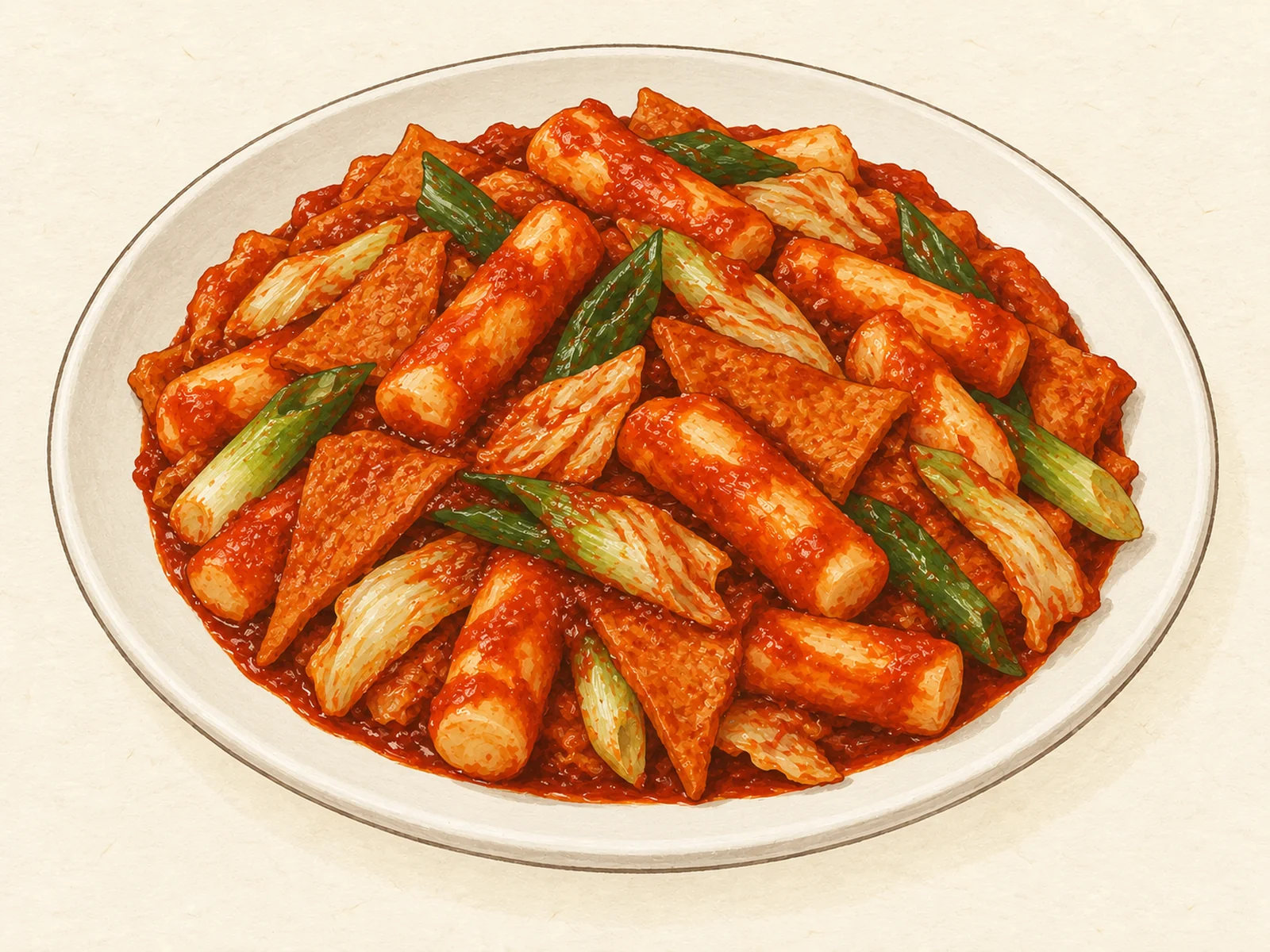
This tteokbokki serves two in about 30 minutes. Cylinder-shaped rice tteok (rice cakes) and eomuk (Korean fish cake) simmer in water with a sweet and spicy sauce made from gochujang (Korean chili paste), together with cabbage and green onion. The key is to stir often until the tteok is soft to the center and the sauce is thick enough to coat it.
Tteokbokki is a standard dish at bunsikjip, snack shops that sell quick dishes such as gimbap (Korean seaweed rice rolls) and ramyeon (Korean instant noodles). The National Folk Museum of Korea’s encyclopedia describes the market style as tteok, eomuk and green onion in a red gochujang sauce. An older soy-based form, gungjung tteokbokki, is listed below as a variant.
The Yonsei University manuscript of Gyugon yoram, thought to date to around 1896, includes a tteokbokki-type recipe using abalone, sea cucumber and garaetteok (long rice cake) cooked in a soy-based liquid. Today’s red tteokbokki is described as spreading after the Korean War, helped by inexpensive wheat tteok and government campaigns to eat flour and mixed grains in place of rice. In Sindang-dong, Seoul, a story tells of Ma Bok-rim tasting a rice cake that fell into black bean sauce and finding a new seasoning, but the source that tells it also states that no record confirms when or by whom gochujang tteokbokki was first made.
For firm, refrigerated tteok, follow the package preparation instructions; this entry uses a short soak. Fresh, soft tteok can go straight into the pan. Tteok made from wheat flour also exists, but this entry uses rice tteok.
Ingredients
Scroll sideways to see all columns →
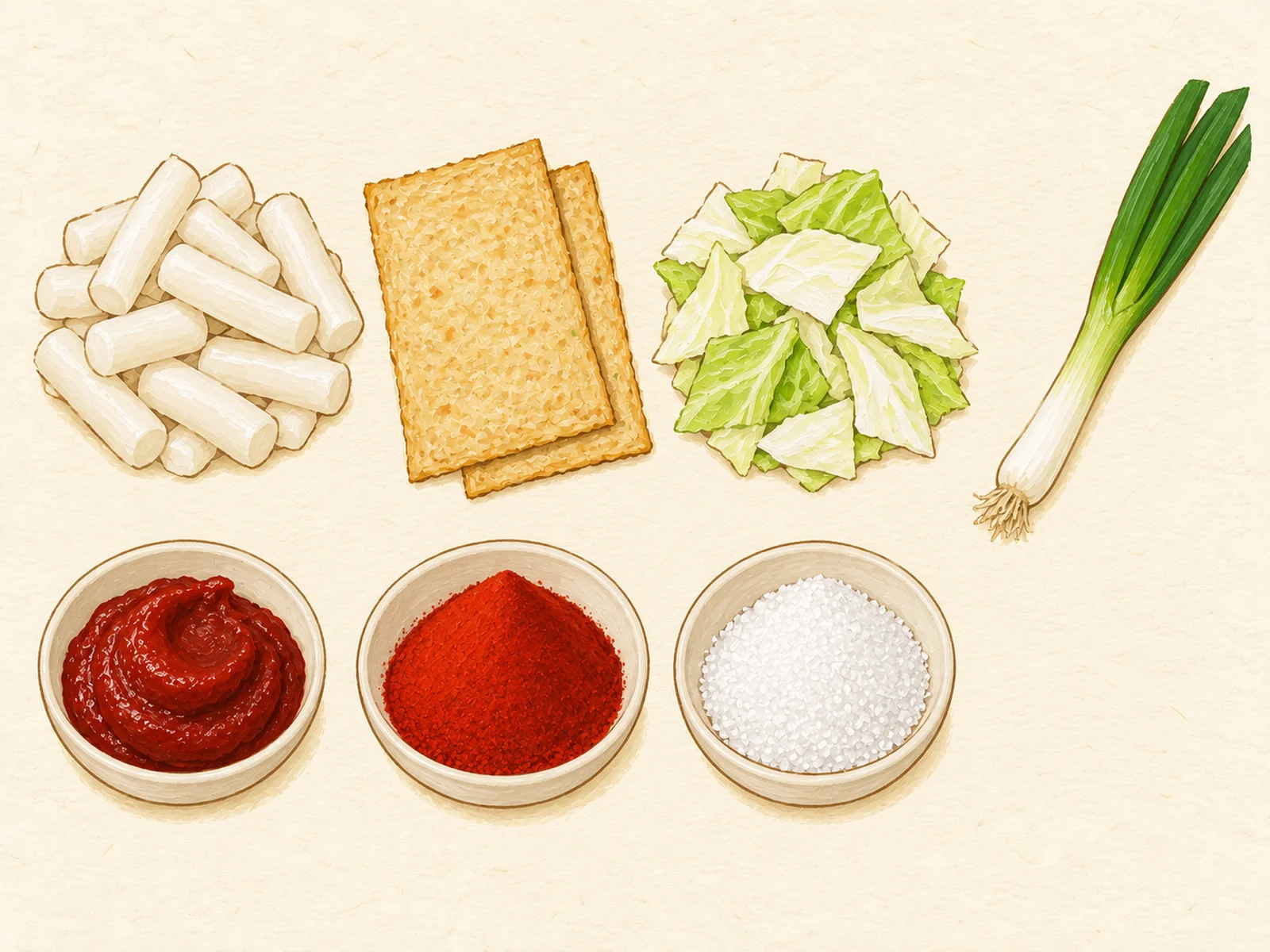
| # | Ingredients | Qty | Remarks |
|---|---|---|---|
| 01 | Tteokbokki tteok (cylinder-shaped rice cakes) | About 350 g (12.3 oz) | Rice tteok. Separate pieces that stick together |
| 02 | Eomuk (Korean fish cake), flat sheet | 2 sheets | Cut into bite-size pieces |
| 03 | Cabbage | About 80 g (2.8 oz) | Cut into bite-size pieces |
| 04 | Green onion | 1 stalk | Cut diagonally, about 5 cm (2 in) long |
| 05 | Gochujang (Korean chili paste) | 3 tbsp | |
| 06 | Gochugaru (Korean chili flakes) | About 2 tsp | |
| 07 | Sugar | 1 1/2 tbsp | |
| 08 | Soy sauce | 1 tbsp | Regular cooking soy sauce, not soup soy sauce |
| 09 | Minced garlic | 1 tsp | |
| 10 | Water | 500 ml (about 2 cups) | Alt: anchovy broth |
Equipment
- Wide pan or shallow pot, 24–26 cm (about 9 1/2–10 1/4 in)
- Bowl (for soaking the tteok)
- Small bowl (for the sauce)
- Spatula
Instructions
Separate the tteok. If the tteok is firm, soak it in warm water for about 10 minutes. Drain it.
Tteokbokki tteok (cylinder-shaped rice cakes) About 350 g (12.3 oz)
Cut the eomuk, cabbage and green onion as noted in the ingredients.
Eomuk (Korean fish cake), flat sheet 2 sheets · Cabbage About 80 g (2.8 oz) · Green onion 1 stalk
In a small bowl, mix the gochujang, gochugaru, sugar, soy sauce and garlic.
Gochujang (Korean chili paste) 3 tbsp · Gochugaru (Korean chili flakes) About 2 tsp · Sugar 1 1/2 tbsp · Soy sauce 1 tbsp · Minced garlic 1 tsp
Put the water and the sauce in the pan. Bring it to a boil over medium-high heat. Stir to dissolve the sauce.
Water 500 ml (about 2 cups)
Add the tteok and cabbage. Boil for about 5 minutes. Stir often.
Add the eomuk. Boil for about 3 minutes more.
Add the green onion. Cook for about 1 minute. Stop when the tteok is soft to the center and the sauce is thick enough to coat it.
Check that the eomuk is hot throughout. Turn off the heat. Serve hot.
Doneness Check
- The tteok is soft all the way to the center, with no hard core
- The sauce is thick enough to coat the tteok, with a little left in the pan
- The cabbage is soft, and the eomuk is hot throughout
Variations
- Gungjung tteokbokki (royal court style)
- Garaetteok (long rice cake) is stir-fried with beef and vegetables in a soy-based seasoning, so it is not spicy.
- Gukmul tteokbokki (soupy tteokbokki)
- One version cooks the tteok and other ingredients in an anchovy and kelp broth and is eaten with the soup.
- Rabokki
- Ramyeon (Korean instant noodles) is cooked with the tteokbokki.
- Gireum tteokbokki (oil tteokbokki)
- The Tongin Market version recorded by the National Folk Museum of Korea is soy-seasoned garaetteok cooked on an oiled griddle.
FAQ
Why is my tteok still hard?
Rice tteok can firm up in the refrigerator as its starch retrogrades. Prepare firm tteok as the package instructs, then cook it until the center is soft, adding a little water if the sauce gets too thick. Thick or very firm pieces can take longer.
How can I make tteokbokki less spicy?
For less heat, leave out the gochugaru or use less gochujang, then taste before adjusting the soy sauce because gochujang also adds salt. Gungjung tteokbokki uses a soy-based seasoning with no chili.
How do I store and reheat leftover tteokbokki?
Refrigerate leftovers in shallow containers within 2 hours after cooking (1 hour if the room is 32°C (90°F) or hotter), keep them at 4°C (40°F) or below, and use them within 3–4 days, which is general leftover guidance rather than a limit tested for tteokbokki. Reheat in a pan with a little water, stirring, until all parts reach 74°C (165°F), since the tteok firms up when chilled.
What goes well with tteokbokki?
The National Folk Museum of Korea's encyclopedia describes market-style tteokbokki eaten with sundae (Korean blood sausage) and eomuk.
Is tteokbokki gluten-free?
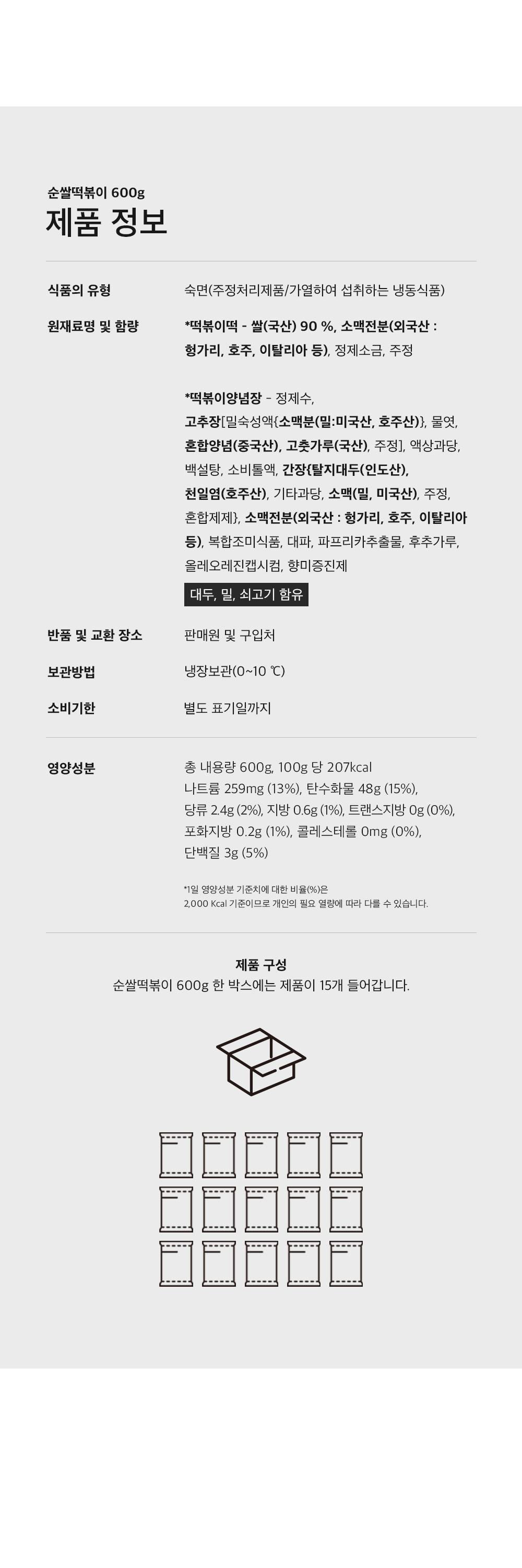
Not always. Gochujang, soy sauce and eomuk can contain wheat, and some rice tteok also contains wheat starch. Check the ingredient and allergen statements on each package.
Sources
- Korean Bapsang — Tteokbokki
- My Korean Kitchen — Tteokbokki
- Kimchimari — Tteokbokki
- Serious Eats — Korean rice cakes
- Wtable — Tteokbokki (Korean)
- 10000recipe — Soupy tteokbokki (Korean)
- Home Cuisine — Jjajang rabokki (Korean)
- National Folk Museum of Korea — Tteokbokki (Korean)
- Korea.net — Street snacks (bunsik)
- KCI — Retrogradation of rice cakes in storage (Korean)
- Chilkab — Rice tteokbokki label (Korean)
- Samjin — Flat fish cake product information (Korean)
- Sempio — Gochujang ingredients
- USDA — Leftovers and food safety
- FoodSafety.gov — Cold food storage chart
- Korea Traditional Knowledge Portal — Tteokbokki in Gyugon yoram (in Korean)
- Korean Food Promotion Institute — Tteokbokki, 2022 (in Korean)
- Rural Development Administration — Tteokbokki street stalls, 2023 (in Korean)
- Federation of Korean Cultural Centers — Sindang-dong tteokbokki (in Korean)
Compiled and reviewed by Nuri · Published · Updated