 K-Dogam
No. 007 · Jang
What Is Ganjang? Korean Soy Sauce Types and Uses
간장 · Ganjang
At a Glance
- Type
- Main types: hansik (traditional), brewed, acid-hydrolyzed, enzyme-hydrolyzed and blended ganjang (Korean food types within jang, fermented pastes and sauces)
- Made from
- Meju (fermented soybean blocks), soybeans or defatted soybeans, with salt and water; some products also use wheat
- Taste
- Salty and savory; sweetness and aroma vary with the method and added seasonings
- Texture
- Thin brown liquid
- Sister product
- In the traditional meju method, the solids left after drawing off the liquid become doenjang (Korean soybean paste)

About This Ingredient
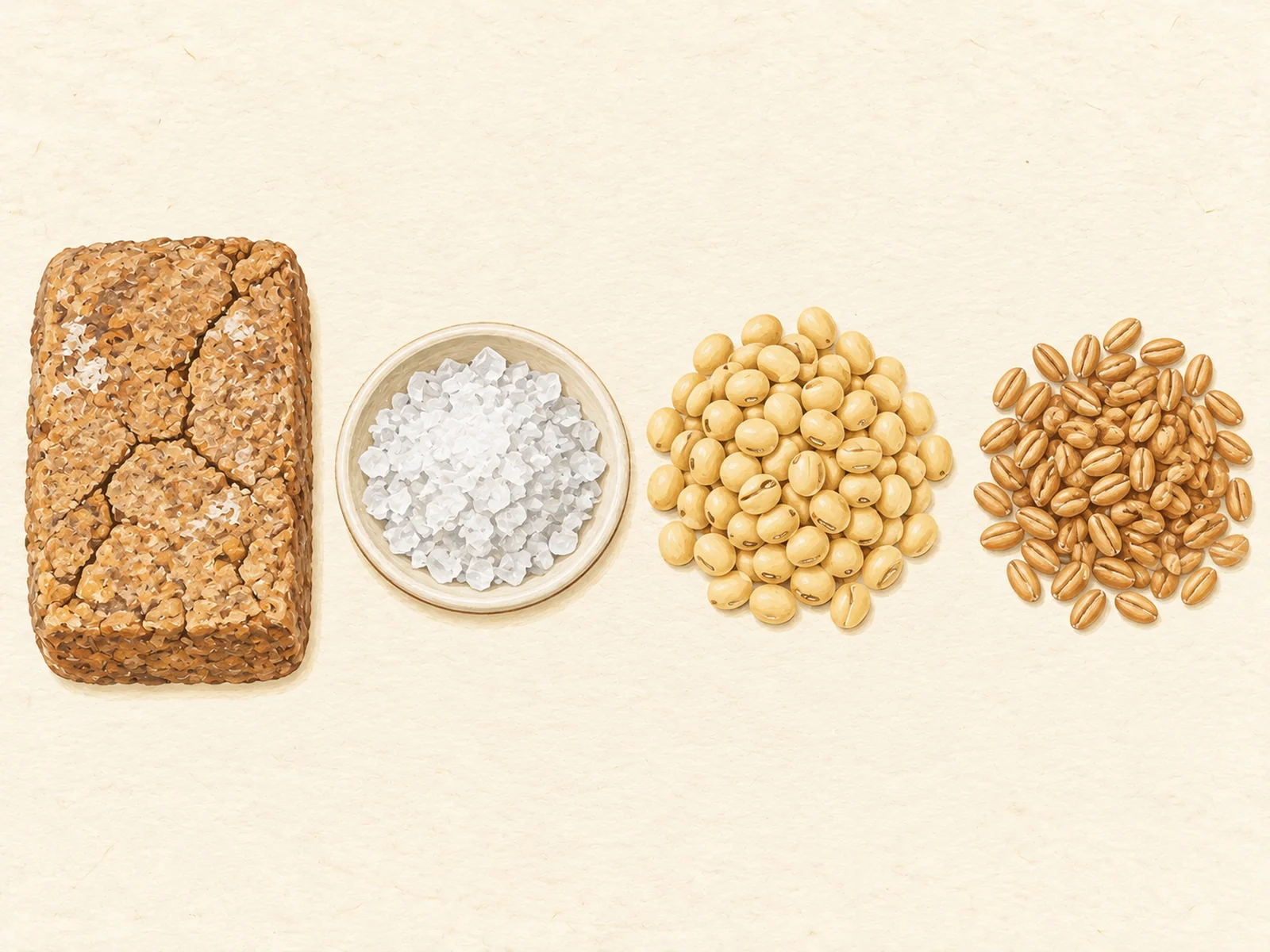
Ganjang (Korean soy sauce) is a Korean liquid seasoning made by fermentation, by breaking down protein with acid or enzymes, or by blending these sauces. It is a thin brown liquid, salty and savory, used to season soups and stews, namul (seasoned vegetables), braised and stir-fried dishes, and dipping sauces. This entry covers the types, how to read the label, where to buy it and how to store it.
Traditional hansik ganjang is made by soaking meju (fermented soybean blocks) in salt water and drawing off the liquid; the remaining solids become doenjang (Korean soybean paste). Brewed soy sauce is made by growing fermentation mold on soybeans or defatted soybeans and a grain such as wheat, then fermenting and aging the mix in salt water.
Guk-ganjang (soup soy sauce) and jin-ganjang are names for how a soy sauce is used and sold, while Korea’s Food Code sorts ganjang by method into types such as hansik (traditional), brewed, acid-hydrolyzed, enzyme-hydrolyzed and blended. Products named jin-ganjang include both brewed and blended types, so the food type on the back label says more than the name on the front.
History
Joseon-era texts record making jang from meju and drawing off the liquid as a separate sauce, including the Sanga yorok (about 1450) and the first volume of the Suun japbang, written by Kim Yu around 1540. Traditional ganjang is said to have been named by age: pale, younger cheongjang (thin soy sauce), jungganjang in between, and dark, sweeter jinjang aged for several years; cheongjang is described as the choice for soups that should stay light in color. The word jinjang is also explained with a second meaning, jang made mainly to obtain soy sauce, so not every jinjang in old texts was long-aged.
Factories made Japanese-style soy sauce in Korea by the early twentieth century. One soy sauce brewery in Masan is recorded as founded in 1905, and a study cites a 1907 list of soy sauce and doenjang factories. Home jang-making is said to have continued while factory soy sauce use grew.
Making soy sauce by breaking down protein with acid was already discussed in a 1929 paper in a Japanese brewing journal. The sources reviewed do not identify when this method was first used in Korea.
Sempio launched Sempio Jin Ganjang in 1966, and the company says jin-ganjang later came to be used as a general name for commercial soy sauce. Today, guk-ganjang (soup soy sauce) and jin-ganjang are names for how a soy sauce is used and sold, and they do not match the Food Code types one to one. Soy sauce made the traditional way with meju is covered by a traditional food standard established in 1993.
Types
- Guk-ganjang (soup soy sauce), also joseon-ganjang
- An everyday name for hansik ganjang made from meju; it is lighter in color and used for soups and namul (seasoned vegetables). Some blended products also carry this name, so check the food type.
- Jin-ganjang
- A product name for commercial soy sauce used in braised dishes, stir-fries and sauces. Specimens under this name include both brewed and blended types, so identify them by the food type on the back label.
- Yangjo-ganjang (brewed soy sauce)
- A food type made by growing fermentation mold on soybeans or defatted soybeans and a grain such as wheat, then fermenting and aging the mix in salt water. It names a method, not a use, and also works in cooked dishes such as stir-fries.
- Honhap-ganjang (blended soy sauce)
- A food type that includes hansik or brewed soy sauce mixed with acid-hydrolyzed or enzyme-hydrolyzed soy sauce. Korean rules require the mixing ratio on specified blends made with brewed soy sauce.
How to Choose
- Name
- Guk-ganjang, joseon-ganjang and soup soy sauce are names for soy sauce for soups. Jin-ganjang is a product name for cooking soy sauce. Korean soy sauce alone does not tell you which kind it is.
- Food type
- Korean labels state the food type, such as 한식간장 (hansik ganjang), 양조간장 (yangjo ganjang, naturally brewed) or 혼합간장 (honhap ganjang, blended). The type describes the method, not quality.
- Flavored soy sauce
- Mat-ganjang (flavored soy sauce) adds ingredients such as vegetables, fruit, sugar or seafood. Check the ingredient list and food type before you use it in place of plain soy sauce.
- Ingredients and allergens
- Ganjang can contain soy and wheat. A soup soy sauce can contain wheat, and a gluten-free soy sauce can still contain soy.
- Nutrition
- Sodium varies by product. Compare sodium per the same serving, such as 15 ml (1 tbsp). Less-sodium products still contain sodium.
- Storage and date
- Read the storage instructions and the date together; some products state a limit after opening.
Where to Buy
- Korean grocery stores sell guk-ganjang and other Korean soy sauces. For soups, ask for guk-ganjang or soup soy sauce.
- Asian grocery stores and online shops also sell Korean soy sauce. Check the name and label, because a store may not carry every kind.
- For bottles labeled for room-temperature storage, the soy sauce and condiment shelf is a place to start. Follow the storage note on the package.
Storage
Before opening, follow the storage note on the package. Keep the bottle in a cool place away from direct sunlight.
After opening, close the cap and keep the bottle in the refrigerator.
Soy sauce can darken over time. Color alone does not show whether it has spoiled.
A study and a manufacturer describe a white film of yeast that can form on soy sauce. Color alone cannot tell a yeast film from salt crystals or mold.
Mold can grow at refrigerator temperatures and in salty foods.
Substitutes
- Jin-ganjang instead of guk-ganjang
- When replacing guk-ganjang with jin-ganjang, start with the same amount and taste; saltiness varies by product, so there is no fixed ratio.
- Salt
- It adjusts saltiness only; it does not replace the savory flavor and aroma of soy sauce.
- Aekjeot (Korean fish sauce)
- It is made from fish, so the aroma changes. It does not suit people with fish allergies or vegetarians.
- Mat-ganjang (flavored soy sauce)
- Added sugar, vegetables or seafood change the flavor, so it does not swap one for one.
Similar Ingredients
- Doenjang (Korean soybean paste)
- In the traditional method, doenjang is a paste made from the meju solids left after drawing off the liquid.
- Aekjeot (Korean fish sauce)
- A salty liquid seasoning made from fish, so its raw material differs from soy-based ganjang.
- Japanese and Chinese soy sauces
- They are also liquid soy seasonings, but their methods, tastes and uses can differ, and light and dark labels do not map onto guk-ganjang and jin-ganjang.
Used In
- No. 001 Kimchi Jjigae with Pork (Kimchi Stew) Recipe
- No. 003 Spicy Korean Pork Stir-Fry (Jeyuk Bokkeum) Recipe
- No. 004 Beef Bulgogi (Korean Marinated Beef) Recipe
- No. 008 Beef Bibimbap (Korean Mixed Rice Bowl) Recipe
- No. 009 Classic Gimbap (Kimbap) Recipe with Ham and Egg
- No. 010 Tteokbokki Recipe (Spicy Korean Rice Cakes)
- No. 011 Budae Jjigae (Army Stew) Recipe with Ham and Ramyeon
- No. 012 Gamjatang Recipe (Korean Pork Bone Soup with Potatoes)
- No. 013 Galbi-jjim (Korean Braised Short Ribs) Recipe
- No. 014 Japchae (Korean Glass Noodles) Recipe with Beef
- No. 016 Dakbokkeumtang (Korean Spicy Braised Chicken) Recipe
- No. 019 Miyeokguk (Korean Seaweed Soup with Beef) Recipe
FAQ
What is the difference between guk-ganjang and jin-ganjang?
Guk-ganjang is an everyday name for a lighter-colored soy sauce used in soups and namul (seasoned vegetables). Jin-ganjang is a product name for commercial soy sauce used in braised dishes, stir-fries and sauces. Some guk-ganjang products are saltier, but this varies by product; check the food type on the label for the method.
What can I use instead of guk-ganjang?
Regular Korean soy sauce such as jin-ganjang works. Start with the same amount and taste, because saltiness varies by product. Jin-ganjang is darker, so the broth may turn darker.
Does opened soy sauce need to be refrigerated?
Follow the storage note on the package first. After opening, close the cap and refrigerate it; a manufacturer also says refrigeration helps keep the flavor and aroma. There is no single limit after opening for every product.
Is ganjang the same as soy sauce?
Ganjang is the Korean word for soy sauce. It covers several kinds, such as guk-ganjang (soup soy sauce) and jin-ganjang, so check which kind a recipe calls for.
Is Korean soy sauce gluten-free?
Not always. Some products, including some soup soy sauces, contain wheat. Look for a gluten-free label rather than relying on the name, and note that gluten-free soy sauce can still contain soy.
Sources
- Kimchimari — Know Your Korean Soy Sauce: A Buying Guide
- Maangchi — Soup soy sauce (Guk-ganjang)
- Just One Cookbook — Korean Soy Sauce
- Sempio — Soy sauce for soup ingredients and allergens
- Sempio — Chosun soy sauce ingredients and gluten-free label
- Sempio — Less-sodium brewed soy sauce
- USDA FSIS — Molds on Food
- Korea Food Code — Jang (in Korean)
- MFDS — Food labeling standards (in Korean)
- aT — 2021 processed food market report: ganjang (in Korean)
- Sempio — Questions about ganjang (in Korean)
- Sempio — Sempio ganjang history (in Korean)
- Sempio — Jin Ganjang Gold product page (in Korean)
- Daesang Chung Jung One — Jin ganjang gold (in Korean)
- Sempio — Soy sauce product FAQ (in Korean)
- Encyclopedia of Korean Culture — Ganjang (in Korean)
- Encyclopedia of Korean Culture — Yangnyeom (in Korean)
- Encyclopedia of Korean Culture — Suun japbang (in Korean)
- Encyclopedia of Korean Culture — Mongo Foods (in Korean)
- Han and Kim — Jang in early Joseon cookbooks (2020, in Korean)
- Lee Han-chang — Korean jang (2016, in Korean)
- Park Yu-mi — Jang culture in the Joseon period and after (2023, in Korean)
- Kinoshita — On chemical soy sauce (1929, in Japanese)
- NAQS — Traditional food standard for ganjang T016 (in Korean)
- Film-forming yeasts in commercial soy sauce (1975, in Korean)
- Kikkoman — White particles on soy sauce FAQ (in Japanese)
- Pearl River Bridge — Why dark soy sauce forms salt crystals
- CJ — Storage and color change of jang (in Korean)
- Korea.kr — Use-by date Q&A (in Korean)
Compiled and reviewed by Nuri · Published